Why Pipeline Welding Inspection is Critical for Long-Term Pipeline Safety And Security
Recognizing the Fundamentals of Pipe Welding Assessment: Vital Variables for Examining Weld Quality and Averting Failings
In the realm of pipe welding assessment, the risks are without a doubt high, necessitating an extensive understanding of fundamental principles to make sure weld top quality and reduce failure threats. Various essential variables come into play, consisting of the selection of ideal materials, the application of advanced assessment strategies, and the recognition of prevalent welding problems.
Importance of Weld Top Quality
The stability of a pipe is essentially dependent on the quality of its welds, making weld top quality a crucial factor in guaranteeing safe and efficient procedure. A pipeline weld functions as a junction factor where products are joined, and any kind of shortages in this location can result in considerable structural weaknesses. Poor bonded quality can result in leaks, tears, and devastating failings, positioning major security threats and ecological risks.
Numerous aspects add to the top quality of a weld, consisting of the option of welding procedure, the abilities of the welder, and the problems under which the welding is done - Pipeline Welding Inspection. Inadequate prep work, inappropriate warm input, and contamination can jeopardize weld integrity, bring about problems such as porosity, incomplete combination, or fractures. Therefore, rigorous top quality control steps need to be implemented throughout the welding procedure to reduce these risks
In addition, the lasting efficiency of a pipe is greatly affected by the longevity of its welds. High-grade welds not only improve the total toughness of the pipeline yet likewise prolong its life span, decreasing the demand for costly repair work and downtime. Hence, ensuring premium weld high quality is critical in pipe style and upkeep techniques.
Key Examination Methods
Ensuring weld high quality requires the application of efficient evaluation methods to determine prospective imperfections prior to they lead to failings. Pipeline Welding Inspection. Amongst the most widely used approaches are aesthetic assessment, radiographic screening (RT), ultrasonic testing (UT), and magnetic bit testing (MT) Each technique serves a distinct function and is chosen based on the details demands of the pipe task
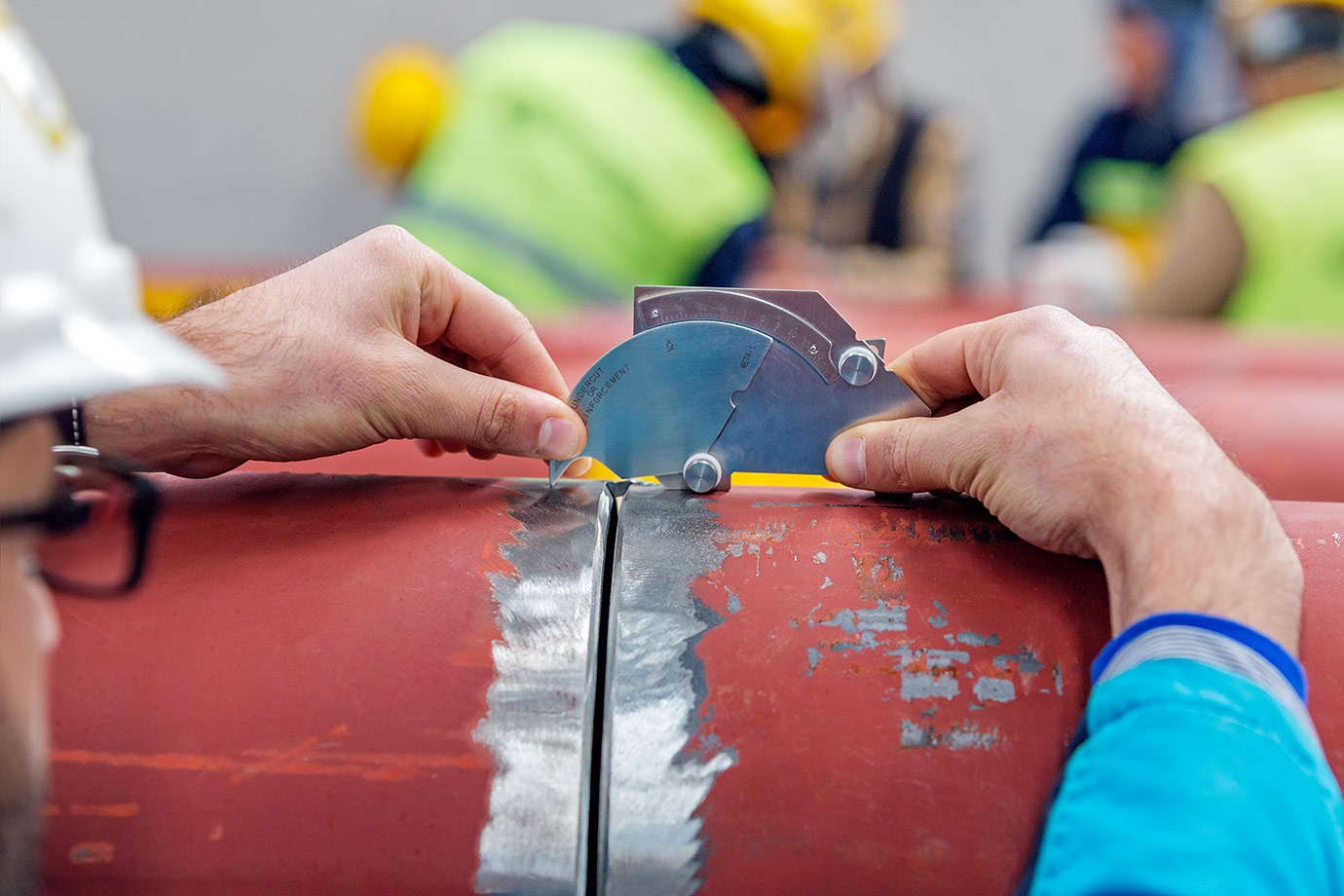
Visual inspection is the initial line of defense, permitting examiners to analyze surface conditions, placement, and total handiwork. It is a fast and economical method that can expose noticeable problems. Radiographic testing gives an in-depth view of inner weld integrity by using X-rays or gamma rays to detect subsurface imperfections. This strategy is particularly efficient for identifying spaces, additions, and fractures.
Ultrasonic testing utilizes high-frequency acoustic waves to review the thickness and honesty of welds, making it excellent for discovering internal interruptions. Magnetic particle screening is a trusted method for recognizing surface and near-surface flaws on ferromagnetic products by using electromagnetic fields and great ferrous particles. By using these key evaluation strategies, pipe welding assessors can guarantee the finest quality requirements are maintained, eventually causing much safer and much more reputable pipeline systems.
Common Welding Problems
In the world of pipe welding, understanding typical welding issues is important for keeping architectural integrity and safety. These defects can cause tragic failures otherwise determined and dealt with without delay. Among one of the most prevalent flaws are porosity, which happens when gas allures in the weld steel, developing spaces that compromise the joint. One more considerable concern is lack of fusion, where the weld steel does not sufficiently bond with the base product, endangering the joint's stamina.

Splits are likewise a vital worry, manifesting in various kinds such as hot splits, cold cracks, and origin splits. Each type postures special challenges and needs specific assessment methods for detection. Undercut is one more flaw that can reduce the weld's cross-sectional location, bring about anxiety concentration factors, while slag inclusion occurs when non-metallic material ends up being trapped in the weld pool, detrimentally affecting the mechanical homes of the weld.
In addition, incorrect bead shape can cause uneven tension distribution. Acknowledging these common issues is crucial for welders and examiners alike, as early detection and correction are vital to guaranteeing the longevity and dependability of pipeline systems.
Products and Their Influence
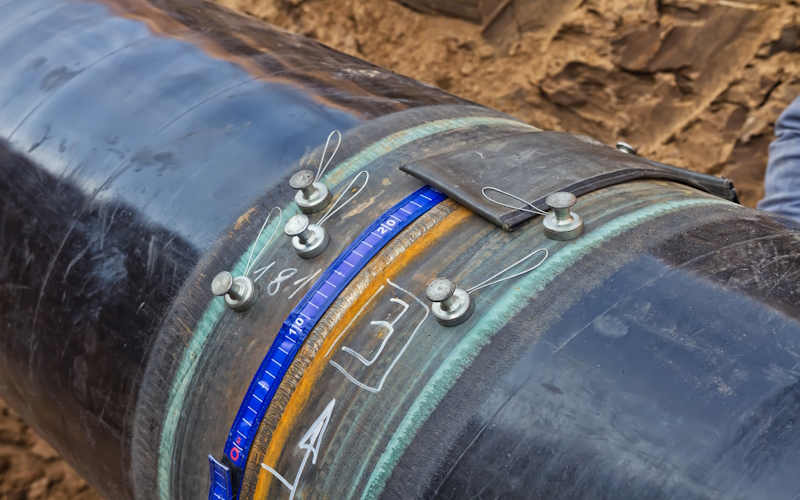
Selecting the appropriate products for pipeline welding considerably affects the overall performance and integrity of the welded joints. The option of base metals, filler products, and coatings plays a crucial duty in determining the strength, deterioration resistance, and resilience of the welds. For example, carbon steel is commonly used for its equilibrium of stamina and cost, but it might be vulnerable to rust in certain settings, demanding making use of corrosion-resistant alloys or safety finishes.
Additionally, different metal welding requires cautious factor to consider of thermal development buildings and potential galvanic corrosion. The compatibility of materials can substantially influence the microstructure of the weld, resulting in variants in mechanical residential properties. For instance, stainless-steel supplies outstanding rust resistance yet may need details filler materials to make sure an audio weld joint.
Furthermore, the effect of temperature and environmental conditions on material selection can not be taken too lightly. High-strength steels may lose ductility at elevated temperatures, while low-temperature applications may require products with enhanced toughness. Eventually, comprehending the effects of product choices is important for achieving ideal additional hints weld high quality and avoiding failings in pipe systems.
Regulatory Specifications and Compliance
Regulative standards and compliance play a crucial function in pipeline welding, establishing the structure within which safe and efficient methods are preserved. These criteria are developed by numerous companies, consisting of the American Society of Mechanical Engineers (ASME), the American Welding Culture (AWS), and the Pipe and Hazardous Products Security Administration (PHMSA) Complying with these laws guarantees that welding procedures fulfill the needed top quality and security criteria.
Compliance with governing criteria is important not only for guaranteeing the stability of the welds however likewise for safeguarding the atmosphere and public security. Examiners are tasked with verifying that welding operations abide by these standards with extensive examinations of both the procedures and the final welds. This involves reviewing welder credentials, welding procedures, and the materials made use of.
Failure to adhere to well-known regulations can bring about considerable effects, including pricey repair work, legal liabilities, and devastating failings. As a result, organizations must incorporate compliance right into their functional methods, fostering a culture of safety and top quality. Routine training and audits are critical parts in keeping adherence to these regulative criteria, making certain that all employees are knowledgeable and furnished to copyright the greatest degrees of pipe welding quality.
Verdict
Finally, a detailed understanding of pipeline welding assessment is important for my latest blog post making certain weld high quality and stopping failures. By using crucial examination techniques and recognizing usual welding flaws, assessors can successfully assess the integrity of welds. Consideration of material option and adherence to governing criteria further improve the reliability and safety and security of pipe systems. Inevitably, these practices add to the prevention of leakages and disastrous failings, emphasizing the important significance of extensive assessment procedures in pipe construction and maintenance.
In the realm of pipe welding examination, the stakes are undeniably high, demanding a complete understanding of basic concepts to ensure weld quality and alleviate failing dangers (Pipeline Welding Inspection).The stability of a pipe is fundamentally dependent on the top quality of its welds, making weld quality an important element in making sure secure and efficient procedure.Several aspects add to the top quality of a weld, including go to website the choice of welding procedure, the abilities of the welder, and the conditions under which the welding is performed. Undercut is another flaw that can reduce the weld's cross-sectional area, leading to tension concentration points, while slag inclusion takes place when non-metallic product ends up being entraped in the weld pool, negatively impacting the mechanical buildings of the weld
In verdict, a thorough understanding of pipe welding examination is essential for making sure weld high quality and protecting against failings.